
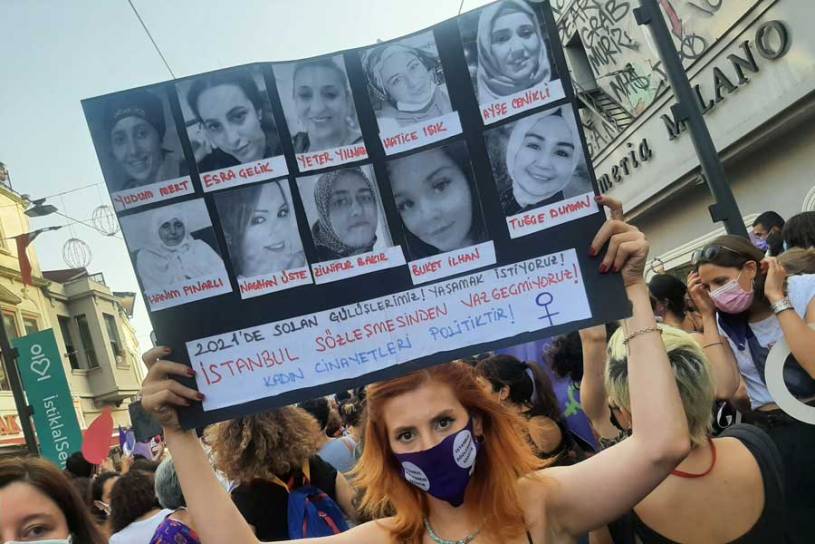
On March 20, 2021, in the middle of the night, a Presidential Decree published in the Official Gazette announced the termination of the Istanbul Convention. Even bringing the Istanbul Convention into question meant eliminating effective legal remedies and methods to combat violence against women, femicides and gender inequality. However, despite the tireless efforts of women’s groups, international reactions, and numerous lawsuits filed with the Council of State for the annulment and stay of execution of the Presidential Decree, the Council of State approved the decision to withdraw from the Convention on January 2, 2023, as finding it “legally appropriate”.
Even though it seems that the Istanbul Convention was surprisingly terminated in one night, it obviously is an outcome of the AKP government’s neoliberal social policies and neoconservative discourse, which it has pursued since it came to power in 2002 and which has become more entrenched after 2015 and under the conditions of the State of Emergency, which leans back on male domination, is pro-family and pro-natalist, rejects equality between women and men, and defines the primary role of women as wives, mothers and caregivers. These top-down politics, which are determined to take away the acquired rights, freedoms and right to life of women and LGBTIs, and which openly declare war on the struggle and legal regulations for the prevention of violence against women and femicides and for a life without violence, have a counterpart rising from the grassroots.
The AKP government’s latest attempt to establish the traditional family model that disregards LGBTI and women’s rights is to define family in the Constitution. In October 2022, it was announced that Article 41 of the Constitution of the Republic of Turkey would be amended because the phrase “Family is the foundation of Turkish society and is based on equality between spouses” was “ambiguous” and the phrase “The family consists of a man and a woman” would be added to the article. The inspiration for this amendment was the constitutional amendment made by the Orban government in Hungary in 2020, which changed the definition of family and banned adoption by same-sex couples. The constitutional amendment reads, ” Hungary shall protect the institution of marriage as the union of one man and one woman established by voluntary decision, and the family as the basis of the nation’s survival. Family ties shall be based on marriage or the relationship between parents and children. The mother shall be a woman; the father shall be a man.”
In this sense, the mobilisation of far-right and populist governments and groups against women’s and LGBTI rights and gender equality in the name of “saving the family” has a universal aspect. The Istanbul Convention is a common target for these governments and groups.
In this blogpost, the first part of a two-part series, we will first recall the Istanbul Convention and its importance, then examine the Istanbul Convention in Turkey and worldwide, and finally discuss the struggles and strategies of women’s and LGBTI organisations in the wake of the annulment decision in Turkey.
In the first episode of the Mor Çizgi Podcast, we discussed “The Past, Present and Future of the Istanbul Convention” with feminist lawyer Hülya Gülbahar, one of the leading figures of the women’s movement in Turkey for many years. Her words are essential in shaping this article, and I recommend listening to the episode for more.
What is the Istanbul Convention? Why is it Important?
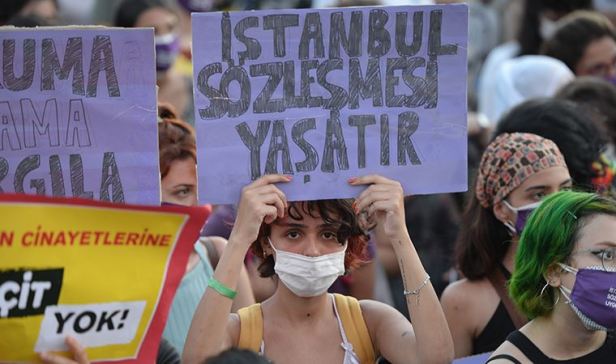
The Council of Europe Convention on Preventing and Combating Violence against Women and Domestic Violence, better known as the Istanbul Convention, was opened for signature in Istanbul on May 11, 2011. Thirty-three Council of Europe and EU member states have signed the Convention; however, 12 countries still need to ratify it. The Convention entered into force in 2014.
In addition to being an inclusive and comprehensive legal arrangement, the Istanbul Convention also has unique features. First, the Convention does not repeat the gender-blindness found in previous legislations aimed at combating violence against women; it clearly and explicitly defines all forms of violence against women and children, including sexual, physical and psychological violence, as “gender-based violence” and criminalises all of them. The Convention also mandates protection against forms of violence not yet covered in most national legislation, such as stalking, harassment and forced marriage. It requires that all victims be protected regardless of age, ethnicity, sexual orientation, disability, migration status and other characteristics. It also makes concrete recommendations on how to deal with these forms of violence, covering punishment and legal provisions and related services, protection and prevention. In this respect, the Convention has four basic principles: Prevention, protection, prosecution and coordinated policies. The Convention sets legally binding standards for signatory countries to prevent violence against all women and girls, protect and support survivors of violence and prosecute perpetrators.
One Main Target of the Global Anti-Gender Movement: Istanbul Convention
The statement of Turkey’s Presidential Directorate of Communications, published on March 21, 2021, stated that Turkey “is not the only country with serious concerns about the Istanbul Convention. Six members of the European Union (Bulgaria, Hungary, Czechia, Latvia, Lithuania, and Slovakia) did not ratify the Istanbul Convention. Poland has taken steps to withdraw from the Convention, citing an attempt by the LGBT community to impose their ideas about gender on the entire society.” In other words, neither the change in attitudes towards women’s and LGBTI rights, gender equality and the family nor the conservative reaction against the rights and freedoms of women and LGBTIs is specific to Turkey. Especially since 2010, there has been an anti-gender mobilisation in Europe and worldwide against the rights and freedoms of women and LGBTIs in the name of “protecting the traditional family”.
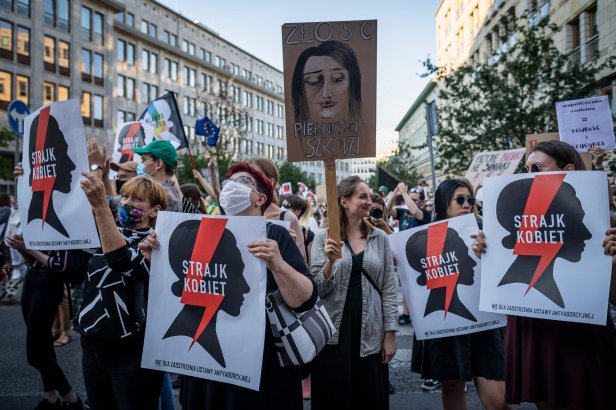
In Poland, Justice Minister Zbigniew Ziobro announced in July 2020 that they would withdraw from the Convention. Prime Minister Mateusz Morawiecki referred it to the Constitutional Court for review because of its definition of “gender”. In October, the ruling party appealed to the same Constitutional Court to bypass mandatory parliamentary procedures while removing the legal basis for abortion. In Hungary, the parliament, where the ruling Fidesz party has a majority, rejected ratification of the Convention in May 2020. Noa Nogradi of the NANE Women’s Rights Association in Hungary stated that the Fidesz government has made it clear that they will not bring the Convention into force in Hungary as long as they are in power. The Slovakian parliament also rejected ratification of the Convention, most recently in February 2020. Bulgaria’s Constitutional Court ruled in 2018 that using “gender” in the Convention was unconstitutional. Countries such as Croatia ratified the Convention despite severe opposition from right-wing groups. Russia and Azerbaijan are the only two Council of Europe member states still needing to sign the Convention.
In the literature, the global mobilisation shaped under far-right, populist, and authoritarian governments against gender equality which is commonly considered as a threat to family and the civilisation’s future (Şahin, 2020) is called an “anti-gender movement” (Kuhar & Patternotte, 2017; Köttig, Petö, & Bitzan, 2017). The Istanbul Convention has become a common ground for these governments for their anti-gender equality attacks because the Convention is the first international treaty that centralises the term “gender” and aims to prevent violence against movement through achieving gender equality in society (Official Gazette, 2012; cited in Şahin, 2020). One main argument that these various governments put against the Istanbul Convention is that it is against their national, religious, and familial values.* * This “mission” to save the family commonly includes anti-gender equality, anti-women’s rights, and anti-abortion political discourses, institutional changes, de facto implementations that confront legal regulations (i.e., the right to abortion in Turkey), and attempts to make dramatic changes in laws guaranteeing the vested rights and freedoms of women and LGBTI people.
In the second part of this series, it will be discussed that the masculine alliance against women’s and LGBTI rights in Turkey, where the decision to withdraw from the Istanbul Convention has an important place in aligning with the anti-gender movement around the world, and women’s insistence on the Istanbul Convention and their struggle to reverse the decision to withdraw.
- In Poland, for example, ruling nationalist conservatives argued that the Istanbul Convention was contrary to Catholic family values. Deutsche Welle (30 July 2020). Polonya’da İstanbul Sözleşmesi AYM’ye gidiyor. https://www.dw.com/tr/polonyada-istanbul- sözleşmesi-aymye-gidiyor/a-54386581. ↩︎
- In Hungary, Prime Minister Viktor Orban announced in 2018 that gender studies departments at universities were shut down by government decree. Bianet. Macaristan’da Toplumsal Cinsiyet Çalışmaları Yasaklandı. Accessed March 31, 2021. https://m.bianet.org/bianet/toplumsal-cinsiyet/201954-macaristan-da-toplumsal-cinsiyet-calismalari- yasaklandi. ↩︎
 morcizgi.org